Saint Eusebius
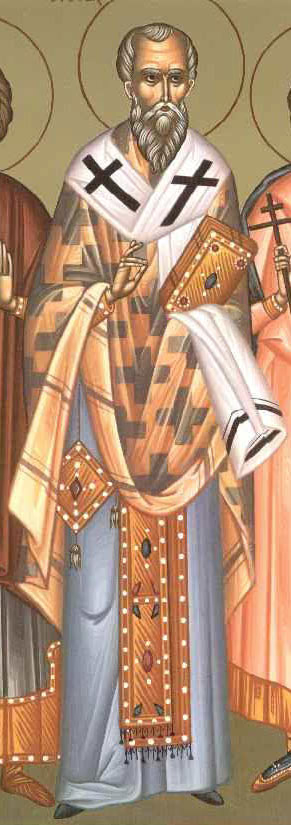
Κέραμος, Εὐσέβιε Μάρτυς Κυρίου,
Εὐθὺς δὲ καὶ στέφανος ἐν τῇ σῇ κάρᾳ.
Εἰκάδι δευτερίῃ κεφαλὴν θλάσαν Εὐσεβίοιο.
Saint Eusebius lived in the troubled times when the Church suffered from the false doctrines of Arius. The Emperor at that time was Constantius, the son of Constantine the Great, who supported this impious heresy and harshly persecuted all those who raised objections and resisted his intentions. The Saint, who was Bishop of Samosata, was persecuted, yet he endured all the hardships and afflictions with wondrous patience, in the hope that Orthodoxy would in the end emerge victorious. When the heretical and people-hated Constantius died, he was succeeded on the imperial throne by Julian the Apostate, who sought to restore the worship of idols. Julian unleashed even more terrible persecutions against the Christians. Then new persecutions began for Eusebius, far worse than the previous ones; yet the Saint remained just as steadfast. The same happened under the Emperor Valens, who was likewise a fervent supporter of the Arians. Once again, the Saint was called upon to defend the purity of the Orthodox faith. For his struggles, Valens removed him from his episcopal throne and exiled him to a desolate place near the river Ister. After the death of Valens, the Saint returned from exile to his diocese and immediately began the cleansing of his province from the heterodox heretics. One day, in the year 380 A.D., as he was passing by the house of a heretical woman, she struck him on the head with hatred using a large stone, resulting in the instant death of the Saint and his passing “from the more sorrowful to the more joyful and delightful things.”
Liturgical texts
Apolytikion
Mode IV. Ταχὺ προκατάλαβε.
Σοφίας τοῦ Πνεύματος, καταυγασθεῖς τῷ φωτί, τὸν λόγον ἐτράνωσας, τῆς εὐσέβειας ἠμίν, Εὐσέβιε ἔνδοξε, σὺ γὰρ ἱεραρχήσας, εὐσεβῶς τὴ Τριάδι, ἤθλησας θεοφρόνως, καὶ τὴν πλάνην καθεῖλες. Καὶ νῦν Πάτερ δυσώπησον, σώζεσθαι ἅπαντας.
Another Apolytikion
Mode IV.
Κανόνα πίστεως, καὶ εἰκόνα πραότητος, ἐγκρατείας διδάσκαλον, ἀνέδειξε σε τῇ ποίμνῃ σου, ἡ τῶν πραγμάτων ἀλήθεια· διὰ τοῦτο ἐκτήσω τῇ ταπεινώσει τὰ ὑψηλά, τῇ πτωχείᾳ τὰ πλούσια. Πάτερ Ἱεράρχα Εὐσέβιε, πρέσβευε Χριστῷ τῷ θεῷ, σωθῆναι τὰς ψυχὰς ἡμῶν.