Μέγας Αλέξανδρος – Ἡ ἑνότητα τῶν Ἑλλήνων (Αρετές και Άθλοι)
Οἱ Ἕλληνες γιὰ αἰῶνες ἦταν διχασμένοι καὶ μόνο σὲ δύσκολες στιγμές, ποὺ ἀφοροῦσαν στὴν ἐπιβίωσή τους, ἑνώνονταν, γιὰ νὰ ἀντιμετωπίσουν εἰσβολεῖς, ὅπως οἱ Πέρσες. Ἀκόμη ὅμως καὶ τότε ὑπῆρχαν διαφωνίες καὶ διαμάχες ποὺ ἔθεταν σὲ κίνδυνο τὴν ἀντίσταση καὶ τὴν ἄμυνα.
Ὁ Ἀλέξανδρος κατανόησε τὸ πρόβλημα τῆς διαίρεσης, ἀλλὰ καὶ τὸ πλεονέκτημα τῆς ἕνωσης τῶν Ἑλλήνων. Συνένωσε τὸν ἑλληνικὸ κόσμο, δημιούργησε θεσμοὺς μὲ τεράστια σημασία ἀκόμη καὶ σήμερα, μὲ διακριτὰ καὶ μεγάλα δικαιώματα, καὶ ἐλευθερία χωρὶς διακρίσεις. Ὁ Ἕλληνας Ἀλέξανδρος ἦταν ὁ πραγματικὸς Ἀλέξανδρος.
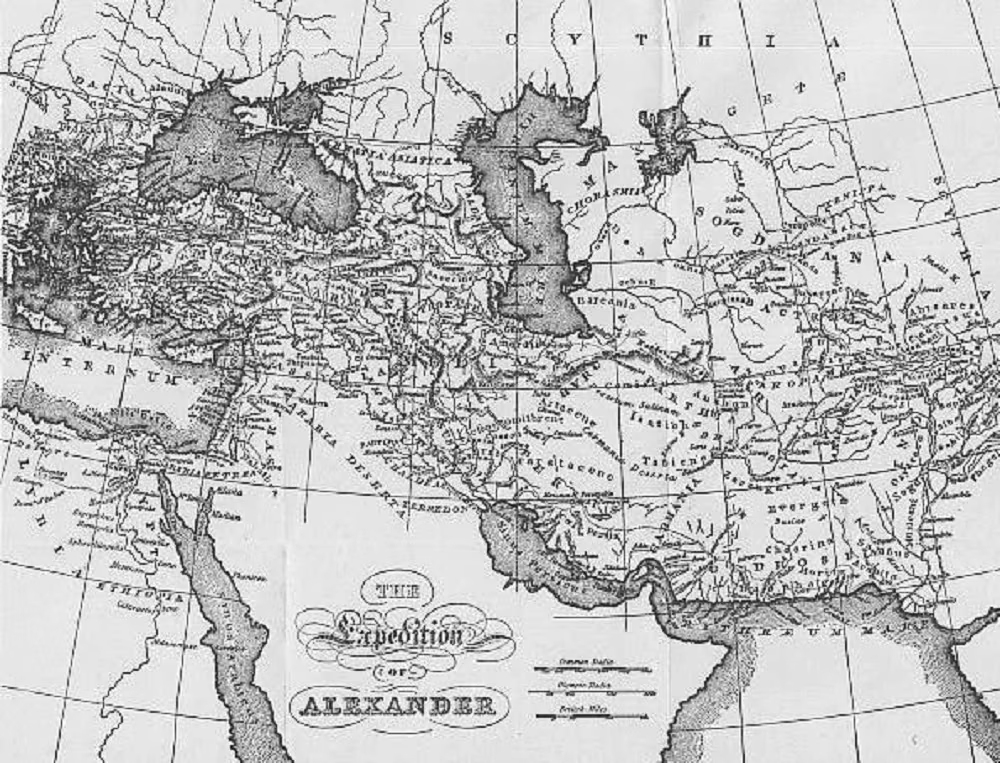
Ἡ δύναμη τῆς προσωπικότητάς του ἦταν τόση, ὥστε μποροῦσε νὰ κρατήσει διακριτοὺς τοὺς δύο ρόλους του τόσο στὸ μυαλὸ ὅσο καὶ στὴ συμπεριφορά του. Ὁ Πτολεμαῖος καὶ ὁ Ἀριστόβουλος εἶχαν δίκιο, ὅταν θεωροῦσαν ὡς ἀληθινὸ Ἀλέξανδρο, τὸν Μακεδόνα Ἀλέξανδρο. Ὅταν χρειαζόταν, τιμωροῦσε τοὺς Ἕλληνες καὶ τιμοῦσε τοὺς Πέρσες. Ἦταν αὐστηρὸς, ἀλλὰ καὶ δίκαιος καὶ ἀκέραιος, ὅπως πρέπει νὰ εἶναι κάθε μεγάλος ἡγέτης, ποὺ βάζει τὸ κοινὸ συμφέρον, τὴν ἕνωση, πάνω ἀπὸ ὅλα.
Ὁ Ἀλέξανδρος ἦταν μιὰ προσωπικότητα σεβαστὴ στὴ συντριπτικὴ πλειοψηφία τῶν Ἑλλήνων, ποὺ ἐξέφρασε καὶ προσωποποίησε τὴν οἰκουμενικὴ διάσταση τῆς ἑλληνικότητας. Μετέβαλε ταυτόχρονα γιὰ πολλὰ χρόνια τὸ ὄνομα τῶν Μακεδόνων καὶ τῆς Μακεδονίας σὲ συνώνυμα μὲ τὴν ἀντίσταση καὶ τὴ νίκη, ὅπως καταγράφει ὁ Πολύβιος στὸν λόγο τοῦ Ἀκαρνάνα πολιτικοῦ Λυκίσκου τὸ 211 π.Χ., στὴ Σπάρτη: «Καὶ ἐνῷ δὲν μπορεῖτε νὰ ἀπολογηθεῖτε σὲ τίποτα ἀπὸ αὐτά, καμαρώνετε διότι ἀντισταθήκατε στὴν ἐπιδρομὴ τῶν βαρβάρων ἐναντίον τῶν Δελφῶν καὶ ἀπαιτεῖτε νὰ σᾶς χρωστοῦν οἱ Ἕλληνες εὐγνωμοσύνη γι᾿ αὐτό. Ἀλλά, ἐὰν ὀφείλετε χάρη στοὺς Αἰτωλοὺς γιὰ τούτη τὴ μιὰ καὶ μόνη ὑπηρεσία, τί εἴδους καὶ πόση μεγάλη τιμὴ πρέπει νὰ λάβουν οἱ Μακεδόνες, οἱ ὁποῖοι τὸ μεγαλύτερο διάστημα τῆς ζωῆς τους δὲν παύουν νὰ ἀγωνίζονται ἐναντίον τῶν βαρβάρων γιὰ τὴν ἀσφάλεια τῶν Ἑλλήνων;
Διότι ποιὸς ἀγνοεῖ ὅτι πάντοτε θὰ βρίσκονταν σὲ μεγάλους κινδύνους οἱ Ἕλληνες, ἂν δὲν εἶχαν προτείχισμα τοὺς Μακεδόνες καὶ τὶς φιλοδοξίες τῶν βασιλέων τους; Ἡ μεγαλύτερη ἀπόδειξη γι᾿ αὐτὸ εἶναι ἡ ἑξῆς: Μόλις οἱ Γαλάτες ἔπαψαν νὰ λογαριάζουν τοὺς Μακεδόνες, διότι νίκησαν τὸν Πτολεμαῖο, τὸν ἐπονομοζόμενο Κεραυνόν, ἀμέσως ἀφοῦ καταδίκασαν τοὺς ἄλλους, ἦλθαν ὑπὸ τὴν ἡγεσία τοῦ Βρέννου μέχρι τὸ κέντρο τῆς Ἑλλάδας. Αὐτὸ θὰ συνέβαινε ἀσφαλῶς πολλὲς φορές, ἂν δὲν ἦταν προπύργιο οἱ Μακεδόνες».