Salamis: A wronged paradise, from the naval battle to the harrowing quarantine station and the inspirations of Sikelianos
The story goes that at the very moment Aeschylus was fighting the Persians at the naval battle of Salamis in 480 BC, the mother of Euripides was experiencing the pangs of childbirth on the island. The first cry of the younger tragic poet of antiquity mingled with the shouts of triumph of the Salamis fighter, his elder colleague… Thus, the two great poets of the 5th century BC were bound together by a common thread, woven on the largest island of the Saronic Gulf.
The watery grave of the Persians in the bay of Salamis would inspire Aeschylus to write —eight years later, in 472— his «Persians». The only surviving ancient Greek tragedy (and the oldest today) based on historical events.
Nevertheless, the ruins of the acropolis at the site of Kanakia at the westernmost tip of Salamis place the island's historical presence many centuries earlier, in the 13th century, when it was still part of the Mycenaean kingdom, while fragments of architecture attest to the uninterrupted presence of inhabitants even during the so-called dark ages of Byzantium.
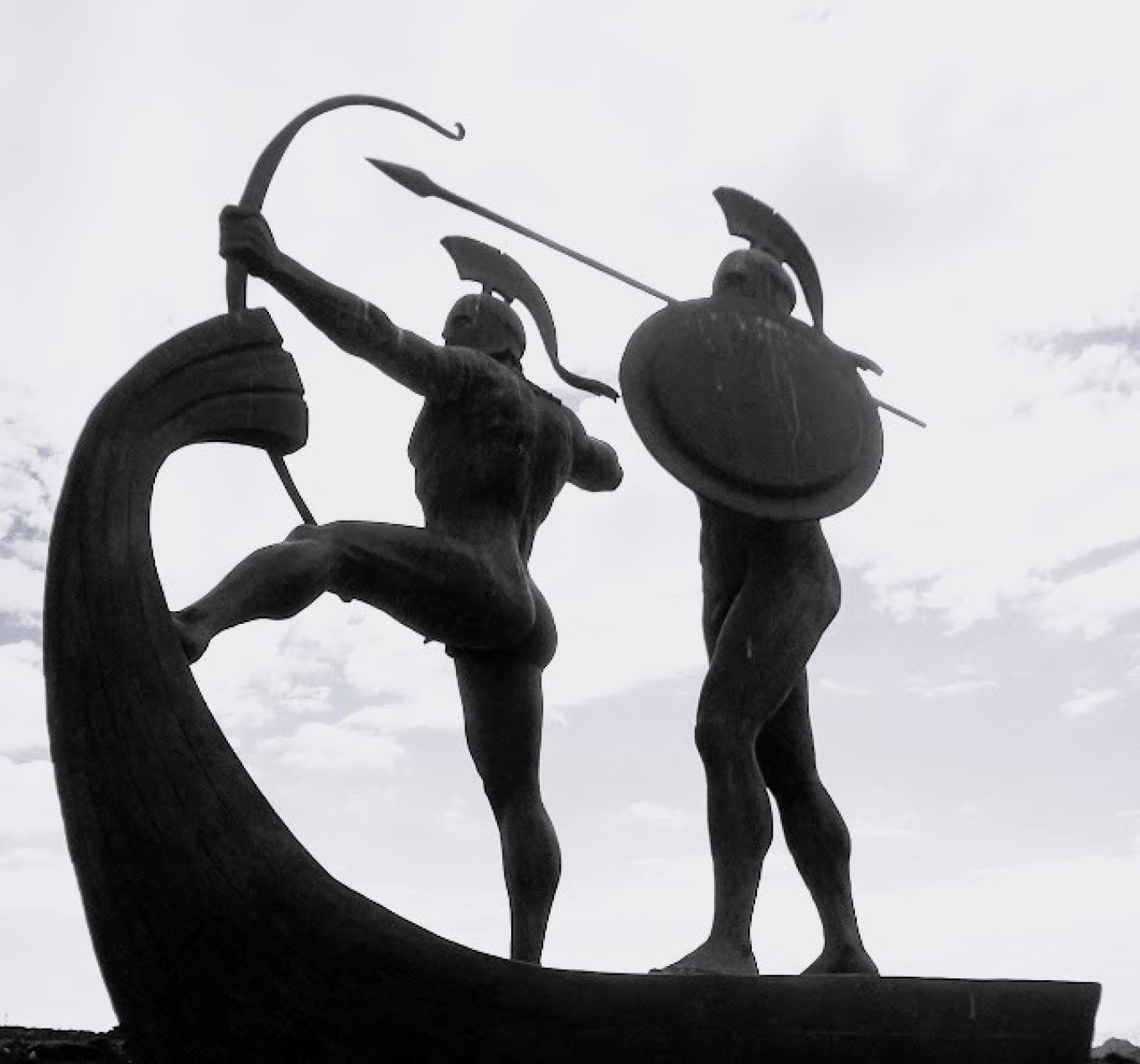
Monument to the Salamis Fighters
Salamis's «presence» is also strong in the Greek Revolution. Here the hospital of the Struggle operated; here, in the spring of 1827, Georgios Karaiskakis would be buried, even though he had no blood ties to the island. Saint Demetrios is here. The church that the fighters visited to worship and to receive its blessing for the difficult battles of Attica. When Karaiskakis was wounded at Faliro, he asked his comrades to carry him to Saint Demetrios so that he might pray, and either be saved to continue the struggle or be taken to be with Him. On the ship he breathed his last, and his friends brought him and buried him inside his beloved church.
The quarantine station of Piraeus
«What are these ruins at the entrance of the island? Sorrowful skeletons of hovels, as if they were inhabited collectively and collectively abandoned to time…» the poet wonders…
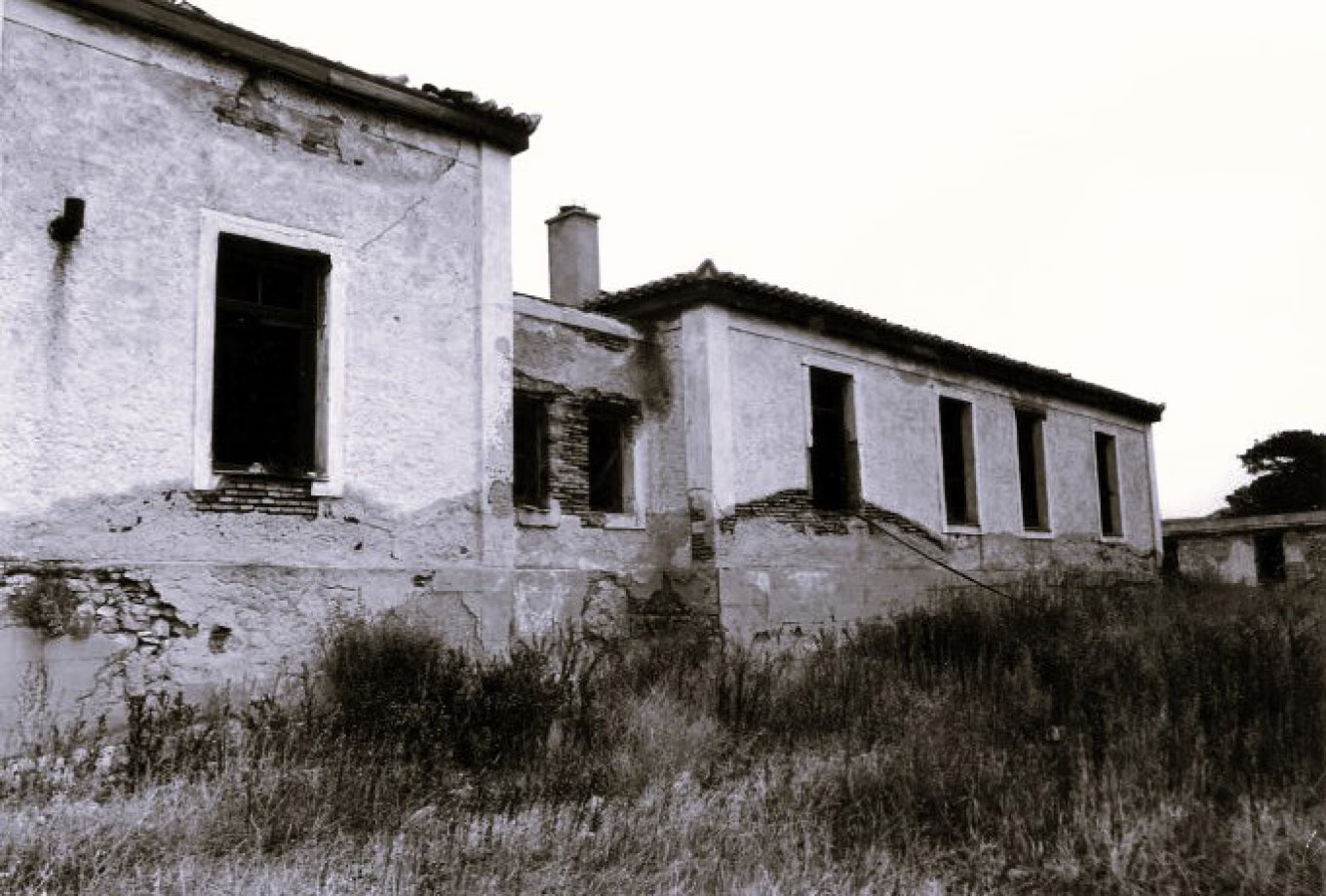
Quarantine station of Agios Georgios, Salamis
The islet in the middle of the sheltered bay of Salamis is Agios Georgios (Saint George). It took its name from a small church built on a rock, dedicated to the saint. «The island of the mad» is what people once called this particular strip of land, surrounded by the sea there, a stone's throw from the cove of Paloukia in Salamis. For diseases of the mind the common folk have no «decorous», «polite», or «discreet» terms… Mental illness is simply madness and the sufferer simply a madman. And at the turn of the 20th century, Agios Georgios operated as an annex of the public psychiatric hospital, the Dromokaiteio. In its little houses lived people lost in the darkness of their minds. This was also the last grim chapter of service for the islet. In 1967 it was handed over for use to the Navy.
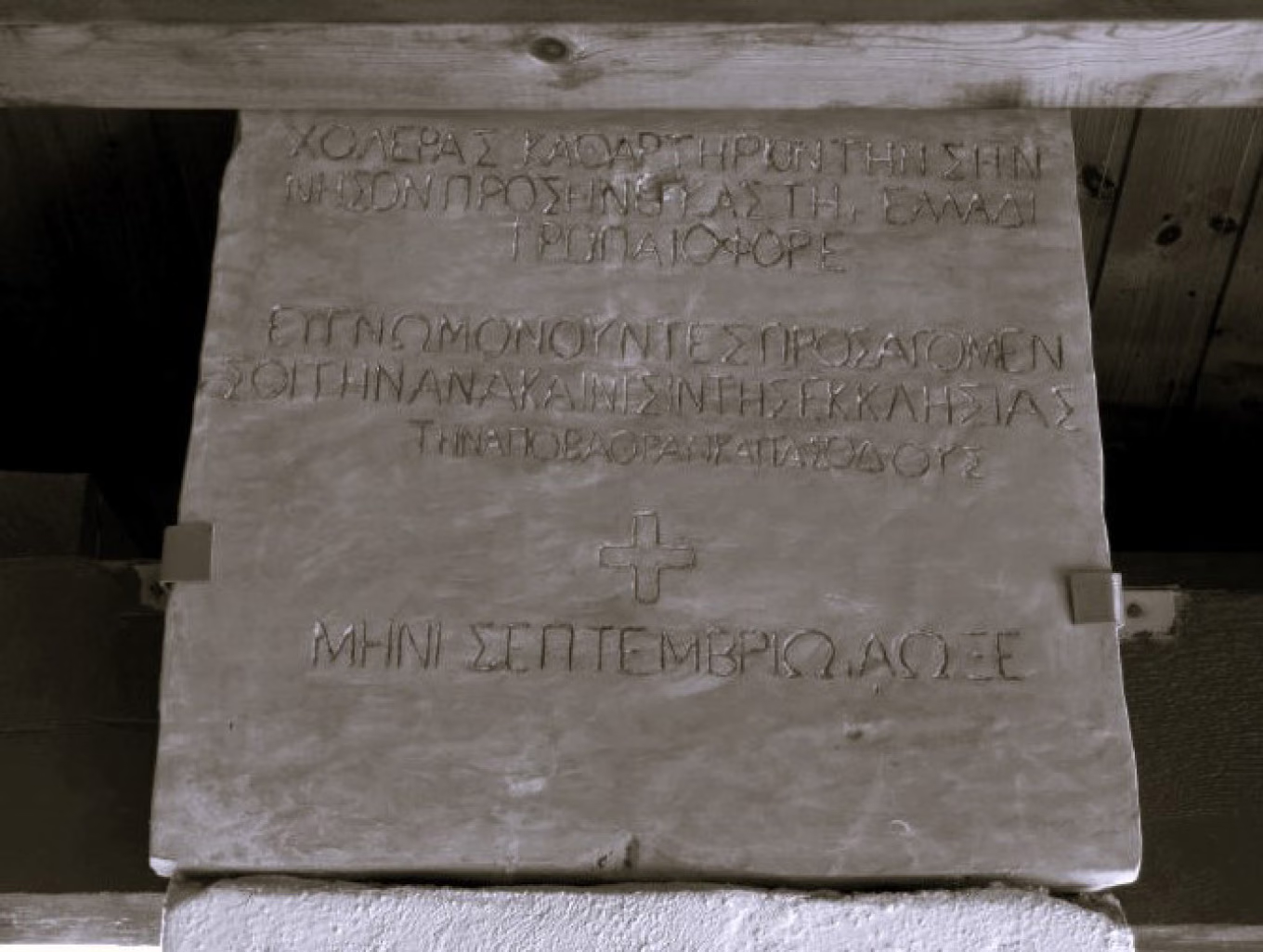
«Cholera purging house», Agios Georgios, Salamis
But the dramatic history of Agios Georgios is not confined to the first half of the 20th century. In reality, the island bore the greatest burden during the 19th, when it operated as a quarantine station. It was then that the little houses were built which today stand like ghosts upon its land. 1864 was one of the accursed years of cholera, which had already decimated population after population around the world. Already from May of that same year, with their incorporation into Greece, the Ionian Islands possessed an extensive sanitary system of prevention, bequeathed to them by the English. The quarantine stations there were quite well tested in quarantines and thereby fortified against the threat of the disease from the West. On the eastern coastline of Greece, again, Chios, Lesvos, and Psara were charged with quarantine infrastructure. Closer to the mainland operated the Lazaretto (quarantine station) of Syros. But the «heart» of Greece remained unfortified. It was then that the facility at Agios Georgios was created, to which essentially the inadequate Lazaretto that until then operated at Kantharos in Piraeus was transferred.
«The boats unloaded batches onto the island, those who came from foreign lands…» describes in his Memoirs Andreas Syngros, who was himself «hosted» at Agios Georgios, arriving from Constantinople. «In impatience I looked forward to my departure for Athens, which I was forced to postpone, because an epidemic of cholera broke out in Constantinople…» he writes, but when at last he departed from the City on the eve of the new year of 1872, an unpleasant surprise awaited him in Athens…
Here, in a cold room, from whose walls hang groans and pain, he would welcome 1872 eating «prison rations», he, one of «the wealthiest of the Greeks» of his time. Nevertheless, this day of the changing of the year would be his last bad experience on the island. He saw to it that the rest of the prescribed period of his quarantine passed painlessly… While the many were crammed into wretched rooms, he, with his power and his money, secured the best possible space and of course the best food.
«I wrote to a friend of mine in Athens and begged him to take measures so that during the days of the purging I would not suffer hardship. He acted, and there were granted to him on the deserted islet “Agios Georgios” near Salamis, designated for purgings, two ground-floor rooms (God help us calling them rooms) which I rented, and he moved there furniture of the first necessity, such as beds, tables, chairs, cooking utensils, etc., even carpets (!)»…
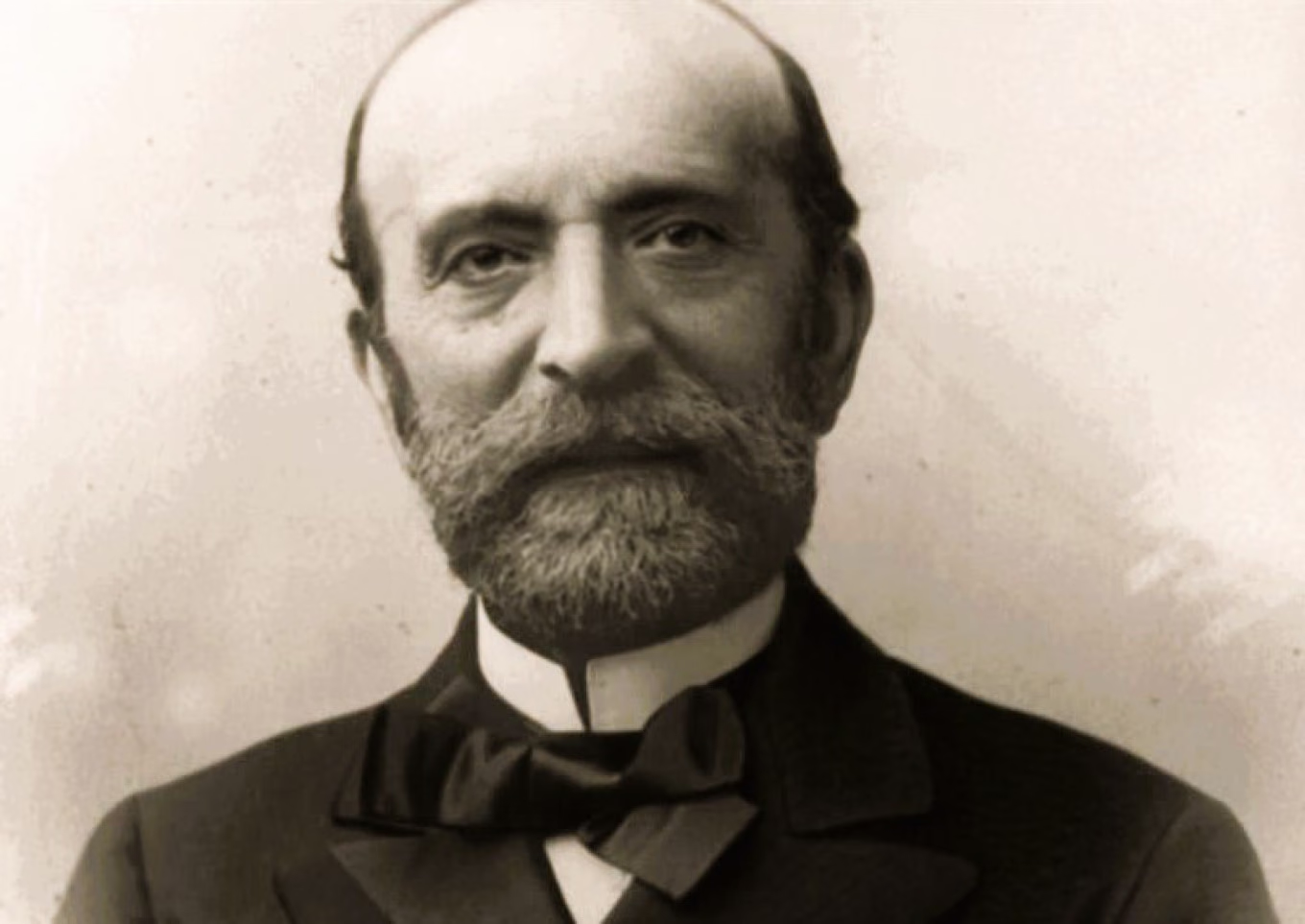 Andreas Syngros
The experience of a single day on the island is also brought by the then 9-year-old Penelope Delta, whose family was active in Egypt, but when cholera reached Alexandria, the Benakis family was forced to leave it. In such a time, one summer nearly a century and a half ago (1883), then, they were unloaded at the quarantine station of Agios Georgios… «The lodging was miserable […]. Father rented by telegraph a little steamer of the Goudis company, and we passed from the line's steamer to Goudis's ship, where we settled into cabins and berths» she records long afterward in her Diary, explaining that travelers arriving in Greece from Egypt had to pass through Agios Georgios and stay for 21 days. And if among them there happened to be a case of cholera, they had to stay another 21. If the quarantine stations were full and could not accept any more people, the travelers stayed in quarantine at sea. Thus the Benakis family too took refuge on the steamship of the seafaring Goudis family.
But the dark times pass, and the rugged course of Agios Georgios, which had dragged the whole of Salamis along with it, closes after the middle of the 20th century. It was then that the largest island of the Saronic Gulf, opposite the coast of Piraeus, the island that today has nothing to envy in the rest, managed to lay to rest its dramatic past on a page of history and to move forward.
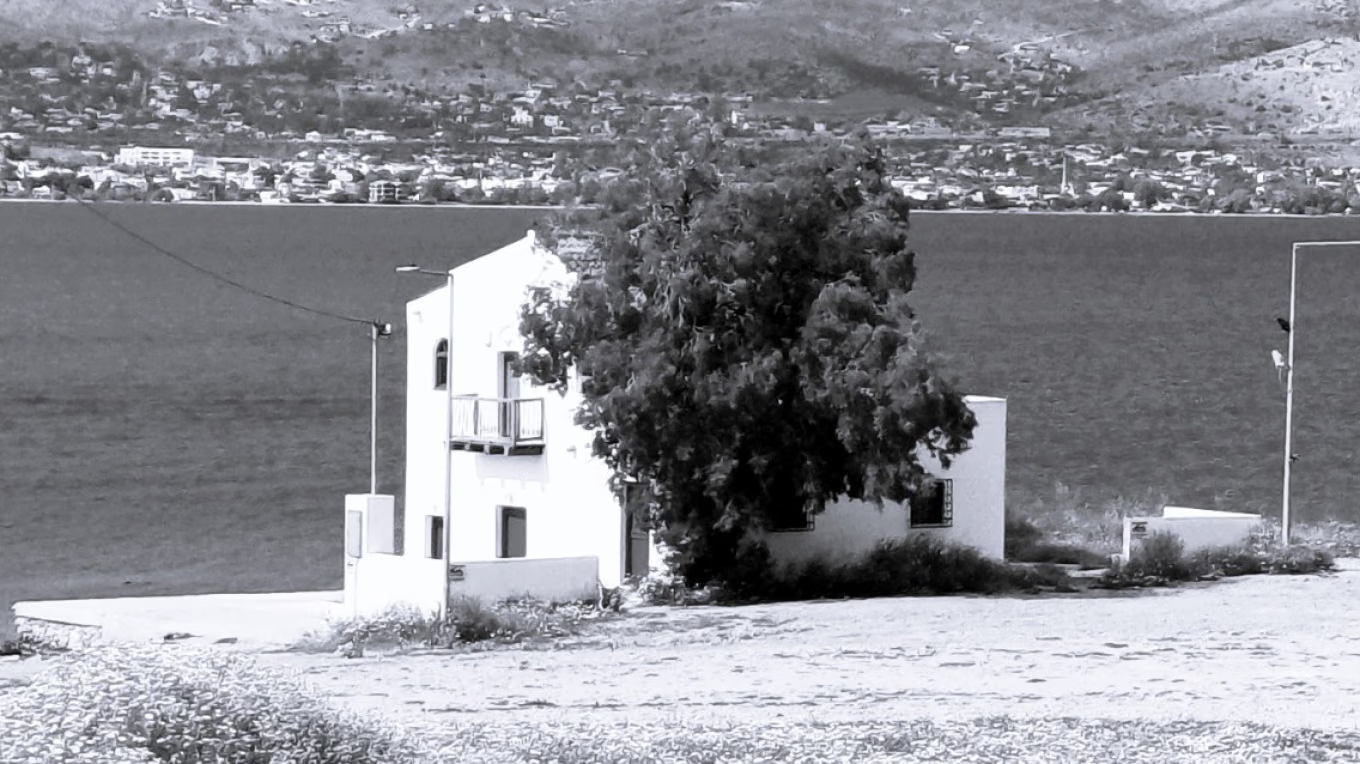 The house of Angelos Sikelianos in Salamis
The poet's retreat
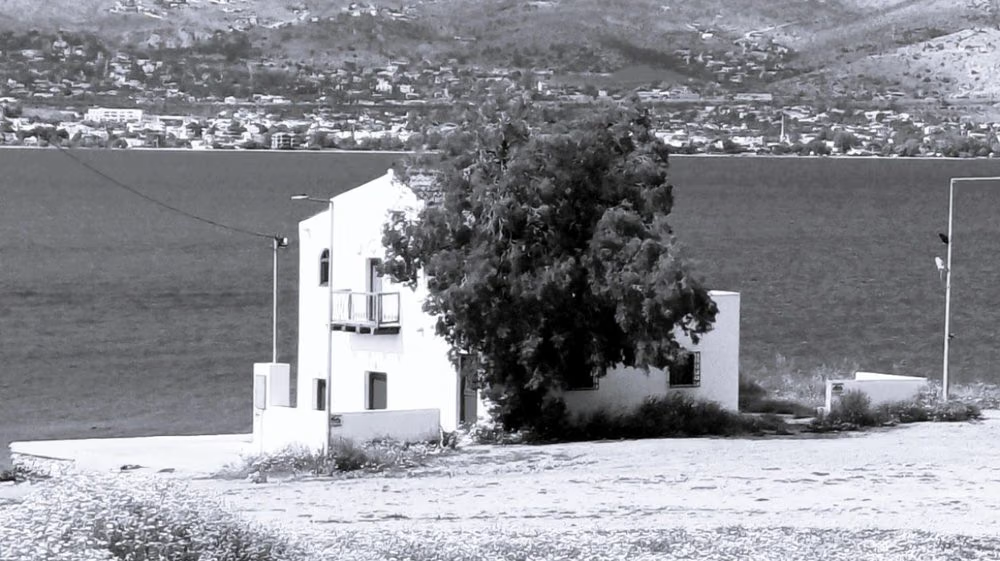
«In the desolate field, there in Salamis, where among thorns and pebbles I had chosen a clean bed, to lie down at dusk, as evening at last fell all around and the constellations one by one filled the sky…» Angelos Sikelianos would write in the mid-1940s, having by then settled in the building granted to him by the Monastery of Faneromeni, across from its own grounds, on the western side of Salamis. This would become his refuge and his inspiration; here he would bond with the inhabitants of the island, and here he and his Anna, his second wife, would drop anchor. The German occupation would drive the couple from their serenity. Angelos and Anna left for Athens. Their retreat was turned into a German observation post. They wanted to keep watch on the monastery, which they intended to convert into a prison for the rebellious inhabitants.
The war ends, the conquerors leave, leaving behind them the little house of inspiration in ruins. The Sikelianos couple return. With the help of inhabitants and monks they repair, whitewash, and struggle to bury in the walls the evidence of the barbarity of the occupation… But Angelos's health had deteriorated. 1950 would be the last time he would visit his beloved Salamis. The following year he would depart on the great journey.
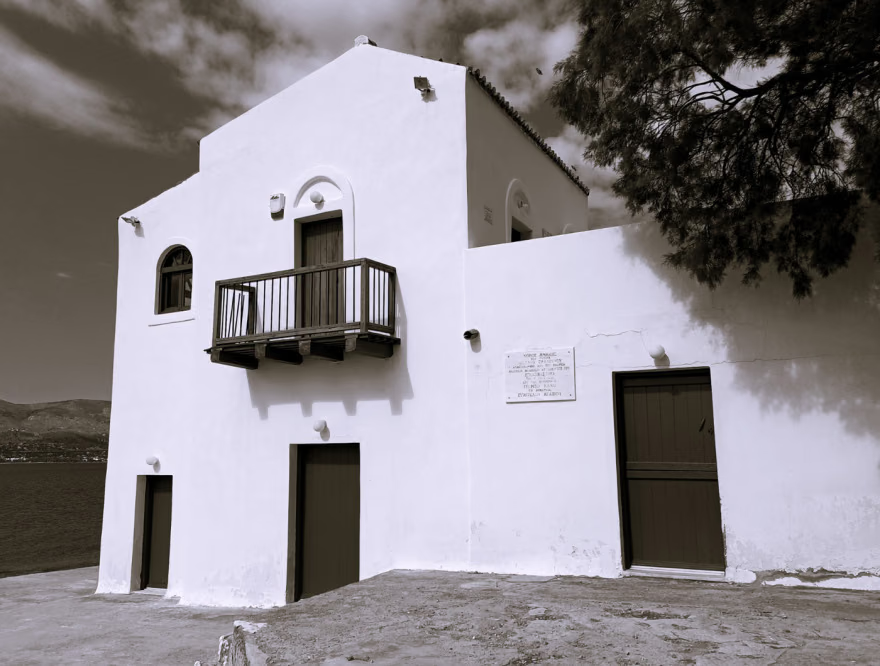 The house of Angelos Sikelianos in Salamis
A wronged paradise
In the meantime, Athens grows, the needs of the inhabitants increase. A mundane, ominous everyday reality dawns for Salamis as well. A central sewage pipeline carries the city's waste to Akrokeramo in Keratsini and from there discharges it untreated into the Saronic Gulf. A constantly replenished cesspool turns the watery triangle Keratsini – Psyttaleia – Salamis into a source of pollution and stench. The Saronic Gulf around the western tip of Piraeus falls ill. The eastern shores of Salamis are grievously afflicted. The island with the beautiful coastline and the impressive masses of forest is wronged…
Eventually the state would undertake to repair the damage. With the co-financing of the European Union it installs on uninhabited Psyttaleia a Wastewater Treatment Center, which begins operating in 1994. Within a few years life reappears on the seabed of the area. The sea recovers its blue, the wind its freshness, and Salamis at last brings out its history and its beauties.
ANA-MPA
SOURCES OF INFORMATION AND PHOTOGRAPHS
– «Memoirs» Andreas Syngros / ed. Alkis Angelou (Estia Bookstore Publications, Athens 1998)
– History of the Athenians, D. Kambouroglou (PALMOS Publications, Athens 1995)
– «First Recollections» Archive of P. S. Delta III / ed. P. A. Zannas (Ermis Publications, Athens 1981)
– Journal «Filotelia» (issues 590-592, May – October 1998), Ant. Virvilis «The quarantine station of Agios Georgios of Salamis»
– Municipality of Salamis
– Archive of T. A. Maniateas