Basil the Great: Homily on the fact that God is NOT the author of evils
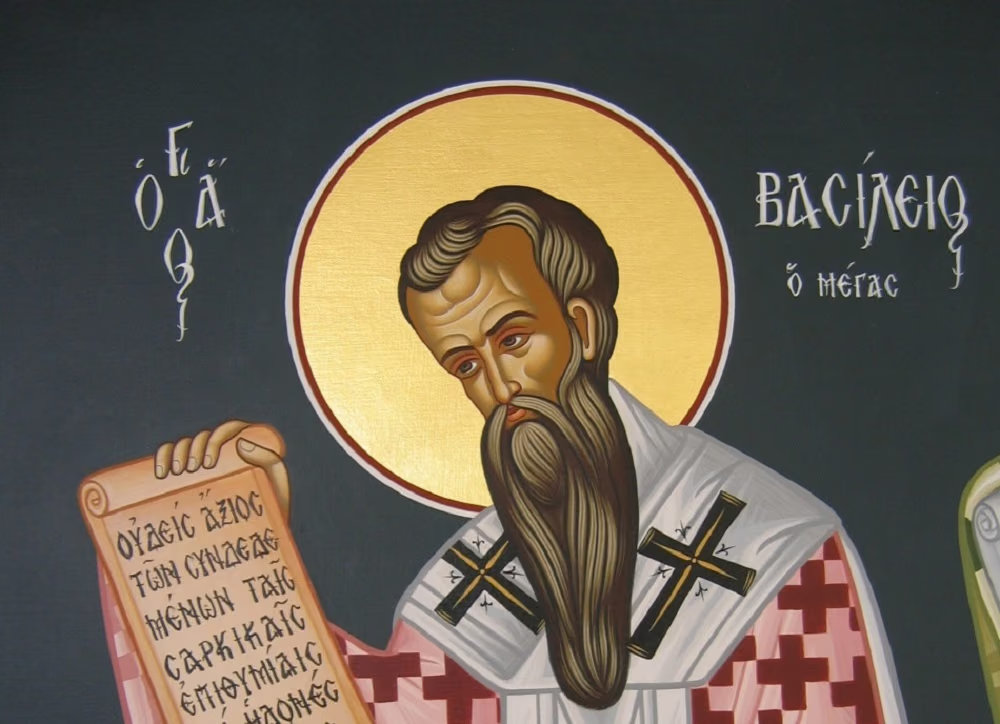
Many are the ways of teaching that the psalmist David has shown us through the working of the Holy Spirit within him. Sometimes the prophet, by recounting to us his own sufferings and the courage with which he endured what befell him, leaves us through his personal example the clearest teaching about patience, as when he says: «Lord, why have my enemies multiplied?»(1).
At other times he commends the goodness of God and the swiftness of the help He grants to those who truly seek Him, by saying: «At my calling my God heard me, who is the God of righteousness»(2). And these words, I say, are equivalent to those of the prophet who said: «while you are still speaking, He will say: behold, I am present»(3). That is, he had not yet finished calling upon Him, and the hearing of God anticipated the end of the prayer. Again, when he sends up to God prayers of supplication and entreaty, he teaches us in what manner it is fitting for sinners to propitiate God. «Lord, do not judge me according to your wrath, and do not punish me according to your anger»(4). And in the twelfth psalm, with the words: «How long, Lord, will you forget me utterly?»(5), so as to show us a certain prolongation of trial.
And through the whole psalm, in order to teach us not to lose heart in afflictions, but to await the goodness of God and to know that, by reason of a certain dispensation, He delivers us to the trials of afflictions, imposing the measure of the trials in proportion to the degree of faith that exists in each one.
So then, after it has been said, «How long, Lord, will you forget me utterly?» and «How long will you turn your face away from me?»(6), he passes at once to the evil of the godless. These, when some small difficulty overtakes them in life, since they cannot bear the more difficult circumstances of things, immediately begin to doubt in their minds whether there is a God who cares for the things here below, whether He observes each of them, whether He renders to each one justice according to his worth. Then, when they see themselves remaining longer in their troubles, they confirm the wicked doctrine and declare in their hearts that there is no God. «The fool has said in his heart: there is no God»(7). And once he has put this into his mind, he then commits every sin in abundance.
For if there is no one who oversees, if there is no one who repays each according to the deeds of his life, what prevents us from oppressing the poor, from killing orphans, from murdering the widow and the sojourner, from daring every unholy deed, from being defiled with impure and abominable passions and with all beastly desires? Therefore, as a consequence of there being no God, he added: «they became corrupt and committed abominable deeds»(8). For it is impossible for them to turn aside from the right path, unless their souls have fallen sick with the sickness of forgetfulness of God.
From what cause have the idolaters been given over «to a worthless mind, so as to do what is not fitting»(9)? Was it not because they said, «there is no God»? From what cause have they been plunged into «dishonorable passions, and their women exchanged the natural use for the unnatural, and the men behave lewdly with men»(10)? Was it not because «they exchanged the glory of the incorruptible God for the likenesses of beasts, of four-footed animals, and of reptiles»(11)?
A fool, then, because he truly lacks mind and understanding, is he who says that there is no God. Close to him, and indeed a man in no way inferior in foolishness, is also he who says that God is the author of evils. For I consider that their sin is equal, because both the one and the other equally deny the good God. For the one asserts that He does not exist at all, while the other determines that He is not good. For if He is the author of evils, it is quite evident that He is not good, so that on both sides there is a denial of God.
From where, he says, do illnesses come? From where premature deaths? From where the complete destructions of cities? Shipwrecks? Wars? Sicknesses? And all these, surely, are evils, he says, and all are the works of God. So whom else can we blame for these events, if not God? Come now, then, since we have become involved in this much-discussed question, after we have led the discourse to some acceptable principle and applied ourselves with greater zeal to the problem, let us try to give a clear and unconfused explanation concerning it.
We must, then, have one thing beforehand in our thought: that, since we are the creation of the good God and are preserved by Him, who dispenses for us both small and great things, we shall not suffer anything when God does not will it, nor is anything of what we endure harmful, or such that it would be somehow better, so that it may be understood also by thought. Deaths, indeed, come surely from God, yet death is by no means an evil, unless someone understands only the death of the sinner. For deliverance from the troubles here is the beginning of the torments in hades. And again, the evils in hades do not have God as their cause, but ourselves. For the beginning and root of sin is our freedom and self-determination. For it would have been possible for those who do not commit evil to have no misfortune; but as for these, since they were deceived into sin through pleasure, what reasonable excuse could we bring forward that they themselves have not become the authors of the misfortunes upon themselves? Evil, then, is on the one hand such with respect to our own perception, and on the other hand such with respect to its own nature. The evil that pertains to nature, then, depends on us; that is, injustice, licentiousness, folly, cowardice, envies, murders, poisonings, intrigues, and whatever evils are akin to these, which by utterly defiling the soul, that has been created according to the image of our Maker, naturally darken its beauty.
We also call evil whatever is painful to us and distressing to the senses; that is, bodily illness, bodily wounds, the lack of the necessities of life, disgrace, financial loss, and the loss of relatives. Each of these is brought upon us by the prudent and good Master for our benefit. For by taking away wealth from those who use it badly, He thus destroys the instrument of their injustice. And He gives illness to those for whom it is more beneficial to have their limbs bound than to have their impulses toward sin unhindered. Deaths come when the limits of life are fulfilled, which from the beginning the just judgment of God has appointed for each one, He who from afar foresees what is beneficial for each of us. Famine, droughts, excessive rains, are common plagues that strike cities and nations, in order to restrain the excess of evil. Just as, then, the physician is a benefactor, whether he imposes pains or aches upon the body (for he fights against the disease and not against the sick person), so good is God, who dispenses salvation to the whole through partial punishments. And the physician who cuts some things, cauterizes others, and removes others entirely from the body, you do not accuse of anything, but you even pay him money, of course, and call him a savior, because he stops the illness when it has appeared in a small part, before the disease has spread to the whole body. But when you see a city that has been laid low by an earthquake upon its inhabitants, or a ship that has been dashed to pieces in the sea with all on board, you do not hesitate to blaspheme against the true physician and savior. And yet we ought to have understood that, when people are sick with slight and curable illnesses, they receive the benefits of care, but when the disease proves greater than the treatment, the removal of the useless member becomes necessary, so that the disease may not extend to the sensitive parts through its continual progress. Just as, then, the physician is not the author of the operation or of the cauterization, but the illness, so too the destructions of cities, which have their origin in excessive sins, absolve God of every charge.
But if indeed God is not responsible for evils, he says, then how has the saying been spoken: «I am the one who fashioned the light and who made the darkness, the one who brings prosperity and causes adversity»(12)? And again «evil, he says, came down from the Lord to the gate of Jerusalem»(13), and «there is no evil in the city that the Lord has not done»(14). And in the great ode of Moses: «See, see, that I exist and there is no other God besides me; I put to death and I make alive, I wound and I heal»(15). But for one who understands the meaning of Scripture, none of these constitutes a charge against God that He is the author and creator of evils. For He who said, «I am the one who fashioned the light and made the darkness», presents Himself thereby as the creator of creation, not the creator of some evil. So that you may not think, then, that one is the author of light and another of darkness, He named Himself the maker and craftsman of those things that seem to be opposites in creation, so that you may not seek another creator of fire and another of water, nor another of air and another of earth. For these appear to be opposed to one another according to the principle of the opposition of their qualities. A thing which many have suffered from, and have turned toward polytheism. And He «makes peace and creates evils». Indeed He makes peace within you, when through good teaching He calms your mind and soothes the passions that revolt against the soul. «And He creates evils», that is, He transforms and improves them, so that, being set aside as being evils, they may partake in the flow of the good. «Create in me a clean heart, O God»(16). Not to create it now, but to renew that which had grown old from wickedness. And «that He might create the two into one new man»(17). The word «to create» does not mean to make from nothing, but to reform those who exist. And «he who is united with Christ is a new creation»(18). And again Moses: «is not this same one your father who obtained you and made you and created you?»(19).
That is, clearly here, by placing creation after making, He teaches us that it has been ordained for improvement, because the name of creation signifies many things. So that when He makes peace, He thus makes peace by creating evils, that is, by transforming them and leading them to betterment. Then, therefore, even if you understand peace as deliverance from wars and call evil the troubles that follow those who make war, that is, campaigns beyond the borders of the homeland, toils, sleeplessness, anxieties, sweat, wounds, slaughters, the captures of cities, captivities, abductions, the pitiful spectacles of the slain, and, in a word, all the grievous things that accompany wars, we say that these have come about by the just judgment of God, who through wars brings punishments upon those who deserve chastisement.
Or would you perhaps have wished that Sodom had not been burned after those unholy deeds? Or that Jerusalem had not been destroyed, nor the temple laid waste, after the dreadful and insane action of the Jews against the Lord? How else would it have been right for these things to happen, if not by the Roman hands, into which the Jews, the enemies of their own life, delivered our Lord? So that it is possible sometimes, and indeed justly, for the evils of war to have been imposed upon those who deserve them. And the saying, «I put to death and I make alive», accept it, if you will, according to its plain meaning. For fear builds up the more simple. «I wound and I heal». And this too is useful to be understood by itself. For the wound instills fear, while the healing urges toward love. It is permitted to you, of course, to conceive also something somewhat higher concerning what has been said. I will put to death through sin and make alive through righteousness. For «insofar as the outer man is corrupted, so much is the inner man renewed»(20). So then He does not slay one and make another alive, but the same person, with the things by which He slays him, He makes alive, and with the things by which He wounds him, He heals him, according to the proverb which says that «you indeed will strike him with the rod, but you will save his soul from death»(21). So then the flesh is wounded, in order that the soul may be healed; sin is put to death, in order that righteousness may live.
Likewise, the saying, «evil came down from the Lord to the gate of Jerusalem» is self-explanatory. What evil? The din of the chariots and the horsemen. And when you hear «there is no evil in the city that the Lord has not done», understand the name of wickedness, that is, that the saying implies the affliction that comes upon sinners for the correction of their faults. For «I afflicted you, He says, and let you hunger in order to do you good»(22), in order to stop wickedness before it spread excessively, like the current of a river that is held back by some strong fence and rampart.
For this reason the sicknesses of cities and of nations, the droughts of the air and the barrenness of the earth and the still harsher circumstances in each one's life cut short the increase of wickedness. So that all these evils that come from God take away the cause of the creation of the real evils. For both the bodily afflictions and the troubles outside the body have been devised for abstention from sin. God, then, destroys evil, and evil does not come from God. For the physician too does not put the illness into the body but casts it out of it. The destructions of cities and the earthquakes and the floods and the losses of armies and the shipwrecks and all the calamities of many people, whether from the earth, or from the sea, or from the air, or from fire, or brought about by any cause whatsoever, happen for the chastening of those who survive. For God, by public scourges, chastens the wickedness of a whole people.
The chief evil, then, is sin, and it depends on our will. This indeed deserves to be called evil. It depends on us either to abstain from wickedness or to be wicked. Of the remaining evils, some are set forth as contests for the display of courage, as in the case of Job the loss of his children, the disappearance of his whole wealth in a single moment, the affliction of leprosy, while others are for the healing of the sins that have been committed, as in the case of David the dishonoring of the royal house, because he was being punished for his unlawful desire. Likewise, we have learned that yet another kind of terrible thing is brought about by the just judgment of God in order to make more prudent those who easily incline toward sin. As, for example, Dathan and Abiram, whom the earth swallowed up, with the pits and chasms that it opened for them(23). Here indeed it is not the same men who by this manner of punishment became better (for how was it possible for those who went down into hades to become better?), but by their example they have made the rest more prudent. Thus too Pharaoh was drowned with his whole army(24). Thus were destroyed those who first inhabited Palestine. So that even if the Apostle sometimes says «vessels of wrath fitted for destruction»(25), let us not think that it is some wicked fashioning (for thus the cause would be more justly attributed to the fashioner), but when you hear «vessels», understand that each of us has been made for something useful. And just as in the noble house, one vessel is of gold, another of silver, another of clay, and another of wood(26) (since the will of each one furnishes the likeness to the materials, and a vessel of gold is he who is pure in character and guileless, of silver he who is inferior in worth to that one, of clay he who minds earthly things and is fit to be shattered, and of wood he who is easily befouled by sin and becomes material for the eternal fire), so too a «vessel of wrath» is he who, like a jar, has contained the diabolical energy and who, because of the stench that has come upon him from the rot, can no longer be put to use, but deserves only to be done away with and lost.
For this very reason, because this one had to be destroyed, the wise and prudent steward of souls governed him so that he became glorious and renowned to all, so that he might then, by his suffering, become useful to others, for he was incurable on account of his excessive wickedness. He hardened him by long-suffering and by the postponement of punishment, intensifying his wickedness, so that the righteousness of the divine judgment might be made manifest in him, by his wickedness being increased to its uttermost limit. For this reason, beginning from smaller blows, always adding to and intensifying the calamities, He did not soften his unsubmissive mind, but caught him both despising the forbearance of God and having grown accustomed to the troubles that were imposed on him. And yet not even thus did He deliver him to death, until he himself drowned himself, when, upon the arrogance of his heart, he attempted to resist the course of the righteous and thought that the Red Sea would be crossed by him as well, just as by the people of God.
Now, then, since you know that these are the kinds of evil that come from God and have distinguished them within yourself, and since you know well, on the one hand, what is truly evil, namely that it is sin, whose end is destruction, and, on the other hand, what that is which seems evil because of the feeling of pain, but has the power of a good thing, such as the afflictions that are imposed in order that sin may be turned aside, whose fruits are the eternal salvation of souls, cease to be displeased with the dispensations of God. And in general, do not consider God the author of the existence of evil, nor imagine that evil has its own substance. For wickedness is not something that exists, just as some animal exists, nor can we consider its essence to be real. For evil is the privation of the good. The eye was fashioned. But blindness comes about through the loss of the eyes. So that, if the eye were not of a corruptible nature, blindness would have no place.
So too evil does not have its own existence, but comes afterward upon the disabilities of the soul. Nor indeed is it unbegotten, as the impious teach(27), who make the wicked nature equal in honor to the good, if both the one and the other are without beginning, for then they are also superior even to genesis. But neither is evil begotten. For if all things come from God, then how is it possible for evil to come from the good? For neither does the shameful come from the beautiful, nor wickedness from virtue. Read the account of the creation of the world and you will find there that «all things are good, and indeed very good»(28). Evil, then, was not created together with the good things. But neither did the intelligible creation, when it was being made by the Creator, come into existence mixed with wickedness. For if material bodies had evil innate within them, how then would the intelligible beings, which differ so greatly in purity and holiness, have existence in common with evil? And yet evil exists, and its working shows that it is greatly diffused throughout the whole world. From where, then, does it have its existence, if it is neither without beginning, he says, nor has been created?
Let those who investigate these matters be asked in turn: from where do illnesses come? From where bodily disabilities? For disease is neither unbegotten, nor is it a creation of God. Living beings were naturally created together with the constitution proper to them and were brought forth into life perfect and whole-limbed, but they fell ill after they departed from their natural state. For they lose their health either because of a bad regimen or because of any other cause that produces illness. God, then, fashioned the body, not the illness. God made the soul, but not the sin. The soul was afflicted after it strayed from its natural state. But what was for it the prior good? Its position beside God and its union through love, from which, after it fell away, it was afflicted with various and manifold sicknesses. But why in general is the soul receptive of evil? Because of the self-determined impulse, which indeed is fitting to a rational nature. For, since it has been released from every necessity and received from its Maker a free life, by reason of its having been created according to the image of God, it perceives the good and knows very well the enjoyment of it, and it possesses authority and power to preserve its life according to nature, as long as it remains in the contemplation of the good and in the enjoyment of the intelligible things. But it also has the authority sometimes to reject the good. And this happens to it, when it is mingled with the flesh because of shameful pleasures, after first being sated with blessed delight and, in a certain manner, falling asleep and being separated from the things above.
Adam was once on high, not in place but in disposition. Then, as soon as he was ensouled and looked up to heaven, he became all joy with the things he saw; he loved the benefactor who had granted him the enjoyment of eternal life, had given him rest with the delights of paradise, had given him authority like that of the angels, and had made him a table-companion of the archangels and a hearer of the voice of God. While he was protected by God with all these things, and was enjoying His good things, very quickly, after he was sated with everything and, in a certain manner, grew insolent from satiety, he preferred, instead of the intelligible beauty, that which appeared delightful to the fleshly eyes, and instead of the spiritual enjoyments he considered the filling of the belly more precious. And at once he found himself outside paradise, outside that blessed manner of living. He did not become evil by necessity, but because of thoughtlessness. For this reason he both sinned because of a bad choice and died because of sin. «For the wages of sin is death»(29). That is, the more he removed himself from life, the more he drew near to death. For God is life; death is the privation of life. So that Adam brought about death by his removal from God, according to the word of Scripture: «for behold, those who flee far from you will be destroyed»(30). Thus it is not God who created death, but we ourselves brought it upon ourselves by our evil will. But neither did He hinder the dissolution through death, for the reasons we mentioned earlier, so as not to preserve the illness immortal in us. Just as if someone would not consent to put into the fire, for baking, a clay vessel that had cracked, before he had healed its defect through its refashioning. But why do we not have sinlessness in our nature, he says, so that, even when we wish, sin might not exist in us? For you too do not consider your slaves friends, when you hold them bound, but when you see them voluntarily carry out their duties toward you.
And so too God is not pleased by what is done out of necessity, but by that which is achieved through virtue. And virtue is achieved by free will and not by necessity. Free will depends on «the things in our power»(31). And «the things in our power» is self-determination. He, then, who accuses the Maker because He did not make us sinless by nature, prefers nothing else than the irrational nature to the rational, and that which is not moved and has no impulse to the deliberate and active nature. These things, though as a digression, yet of necessity we have said, so that, having been cast down into speculations, you may not, along with the privation of what is valuable, endure in addition the privation of God as well. Let us cease, then, from correcting the wise. Let us cease from seeking something better than what He created. For even if the causes of the particular plans escape us, at least let there exist in our souls one doctrine, surely, namely: that no evil comes from the good.
Close to this, moreover, there enters for examination, according to the sequence of the idea, also the problem concerning the devil. If evils do not come from God, then from where does the devil come? What, then, do we say about this? For this question the same justification will be sufficient for us that we assigned also for human wickedness. That is, from where did man become wicked? From his own free choice. From where is the devil evil? From the same cause. For he too has a free life and has within him the power either to remain near God or to be estranged from the good. Gabriel was an angel and continually stood beside God. Satan too was an angel, but he fell utterly from his own rank. And him his will preserved on high, and this one his self-determined will cast down. Surely he too could have apostatized and this one could have not fallen. But the one was preserved by his insatiable love for God, and the other was made an outcast by his departure from God. This is evil, that is, estrangement from God. A small turning of the eye makes us either to be with the sun or with the shadow of our body. And in this case the illumination is ready for him who looked up, while for him who turned toward the shadow the darkness is necessary. Thus the devil becomes evil. He is not a nature opposed to the good, but from his will he has his wickedness.
From where, then, does there exist in him this war against us? Because, by being a receptacle of every wickedness, he received also the sickness of envy and envied us for our honor. He could not endure our life, which was without sorrow in paradise. After he had deceived man with wickedness and intrigues, and had used the desire that man had to become like God in order to deceive him, he pointed out to him the tree and promised him that by eating from it he would make him like God. For «if you eat, he says, you will become gods, knowing good and evil»(32). He was not created to be our enemy, but out of jealousy he became our enemy. For, seeing himself to have fallen from the rank of the angels, he could not bear to see the earthly creature being raised up through progress to the angelic dignity.
Since, then, he became an enemy, God instilled in us enmity against him, by the things which He spoke to the beast that had served him, when He directed the threat to it: that «I will set enmity between you and her descendants»(33). For indeed reconciliations with wickedness are harmful. Besides, this is the law of friendship: that it naturally is born by reason of likeness in those who are joined together. Consequently the saying is very true: «evil communications corrupt good manners»(34). For just as in places that are infected by diseases the air that is breathed transmits a hidden sickness to those who live there, so association with evils instills great evils into souls, even if the harm is not immediately perceived. For this reason the enmity against the serpent is irreconcilable. And if the instrument deserves so much hatred, how much is it fitting that we hate the very perpetrator?
But also why, he says, was the tree in paradise, through which the devil was destined to begin his undertaking against us? For if he had not had the bait of deceit, how would he have led us through disobedience to death? For there had to be the commandment that would test our obedience. For this reason there was a plant fruitful in beautiful fruits, so that we might be justly deemed worthy of the crowns of endurance, since we would avoid the pleasurable and display the good of self-control. Upon the eating there followed not only the transgression of the commandment but also the knowledge of nakedness. For «they ate, he says, and their eyes were opened and they saw that they were naked»(35). But they had to not know their nakedness, so that the mind of man might not be occupied with supplying the deficiency, by devising garments for himself and warmth for his nakedness, and in general, by the care of the flesh, being drawn away from the contemplation of God.
But why were the garments not fashioned at the same time together with him? Because these ought to be neither natural nor artificial. For natural garments are a characteristic of the irrational animals, for example feathers, hairs, thick hides, which can endure bad weather and bear the heat. In these, one in no way differed from another, because in all of them nature is equal in honor. But in man it had to be that, in proportion to his love for God, the repayments of good things should be various. Professional occupations would cause cares, a thing which had to be avoided as harmful for man. For this reason too the Lord, when He calls us anew to the paradisiacal life, uproots anxiety from our souls by saying: «Do not be anxious about your life, what you will eat or what you will drink, nor about your body, what you will wear»(36). So then neither by nature ought he to have had coverings, nor through art, but there were ready garments of another kind, provided that he displayed virtue, those which were destined to appear upon man by the grace of God and to shine round about him with certain luminous garments, such as are the garments of the angels, which surpass the flowers in variety and the stars in splendor and radiance. For this reason, then, the garments were not given to him at the same time, because they were prizes of virtue, which lay within man's reach and which, because of the diabolical influence, he was unable to attain.
Because of our old fall, which came about through his harmful working, the devil became our adversary. The Lord dispensed for us the contest against him, so that through obedience we might again wrestle and be crowned for the victory over our adversary. Would that he had not become a devil and had remained in the rank in which from the beginning the commander appointed him. But since he became an apostate, he became an enemy of God and of the men who were fashioned according to the image of God (for this very reason indeed he is a man-hater, because he is also a fighter against God; and he hates us as possessions of the Master, he hates us as likenesses of God), He therefore used his wickedness—He who with wisdom and providence governs human affairs—in order to train our souls, just as the physician uses the venom of the viper in order to prepare saving medicines.
Who, then, was the devil? And what was his rank? And what his dignity? And from where in general did he receive the name Satan? Satan, then, he is called, because he opposes the good. This is what the Hebrew word means, as we have learned in the books of the Kingdoms. «For the Lord raised up against Solomon a satan, Hadad the king of the Syrians»(37). And devil (diabolos), because he himself becomes both an accomplice of our sin and our accuser. For he rejoices in our destruction and stigmatizes us by our deeds. His nature is bodiless, according to the Apostle who said: «we do not wage our struggle against flesh and blood, but against the wicked spirits»(38). His dignity is imperial. For he says «we struggle against the principalities, the powers, the world-rulers of this dark world»(39). And the place of his dominion is the region of the air, as he himself tells us: «according to the ruler of the authority of the air, of the spirit that now works in the sons of disobedience»(40). For this reason he is also called the ruler of the world, because his dominion is around the earth. And the Lord too speaks somewhat thus: «now is the judgment of this world, now the ruler of this world will be cast out»(41). And again: «the ruler of this world is coming and has no power over me»(42).
But since we have spoken about the army of the devil, that «they are wicked spirits in the heavens»(43), we must know well that Scripture usually calls the air heaven, as for example the saying «the birds of heaven»(44) and «they mount up to the heavens»(45), that is, they rise very high into the air. For this reason too the Lord said that «Satan fell like lightning from heaven»(46). That is, that he fell from his authority and, fallen down, is trampled underfoot by those who have hoped in Christ. For «He gave authority to the disciples to tread upon serpents and scorpions and upon all the power of the enemy»(47). Since, then, his wicked dominion has been driven out and the region around the earth has been cleansed by the saving passion, which made peace with things earthly and things heavenly(48), the kingdom of heaven is therefore proclaimed to us. For John says «the kingdom of heaven has drawn near»(49) and the Lord everywhere proclaims the gospel of the kingdom. And still earlier the angels cried out «glory to God in the highest and on earth peace»(50) and those who rejoiced at the entry of our Lord into Jerusalem cried out «peace in heaven and glory in the highest»(51).
And in general innumerable are the voices of the victory-songs, which present the final crushing of the enemy, because no struggle, no contest remains for us in the heavens. No one resists us and turns us aside from the blessed life, but henceforth we, without sorrow, possess the inheritance and continually enjoy the tree of life, from which originally, because of the plotting of the devil, we were prevented from eating. For «God placed the flaming sword to guard the way to the tree of life»(52), which, having passed through unhindered, may we enter into the enjoyment of the good things in Christ Jesus who is our Lord. To Him be the glory and the power unto the ages of ages.
Amen.
REFERENCES
(1). Ps. 3, 2.
(2). Ps. 4, 2.
(3). Is. 58, 9.
(4). Ps. 6, 2.
(5). Ps. 12, 4.
(6). Ps. 12, 2.
(7). Ps. 13, 1.
(8). Ps. 13, 1.
(9). Rom. 1, 28.
(10). Rom. 1, 26-27.
(11). Rom. 1, 23.
(12). Is. 45, 7.
(13). Mic. 1, 12.
(14). Amos 3, 6.
(15). Deut. 32, 39.
(16). Ps. 50, 12.
(17). Eph. 2, 15.
(18). 2 Cor. 5, 17.
(19). Deut. 32, 6.
(20). 2 Cor. 4, 16.
(21). Prov. 23, 14.
(22). Deut. 8, 3.
(23). Num. 16, 31 ff.
(24). Ex. 14, 28.
(25). Rom. 9, 24.
(26). 2 Tim. 2, 20.
(27). He alludes here to the adherents of the dualistic systems and to the Gnostics who believe similarly to them, who accepted God and evil as two self-existent existences.
(28). Gen. 1, 31.
(29). Rom. 6, 23.
(30). Ps. 72, 27.
(31). «The things in our power» is self-determination. By the term «the things in our power» are signified the things that depend on man's self-determination. The terminology is that of Stoic philosophy.
(32). Gen. 3, 5.
(33). Gen. 3, 15.
(34). 1 Cor. 15, 33.
(35). Gen. 3, 7.
(36). Matt. 6, 25.
(37). 3 Kingdoms 11, 14.
(38). Eph. 6, 12.
(39). Eph. 6, 12.
(40). Eph. 2, 2.
(41). John 12, 31.
(42). John 14, 30.
(43). Eph. 6, 12.
(44). Matt. 6, 26.
(45). Ps. 106, 26.
(46). Luke 10, 18.
(47). Luke 10, 19.
(48). Col. 1, 20.
(49). Matt. 3, 2.
(50). Luke 2, 14.
(51). Luke 19, 38.
(52). Gen. 3, 24.
Patristic Editions «Gregory Palamas», Works of St. Basil, Volume 7, Homily 4, pp. 86-123. (Source of the electronic text: "Holy Metropolis of Glyfada") Homily on the fact that God is not the author of evils (Basil the Great) – Η ΑΛΛΗ ΟΨΙΣ