π. Δημητρίου Μπόκου: Δούλος και Αφέντης
π. Δημητρίου Μπόκου
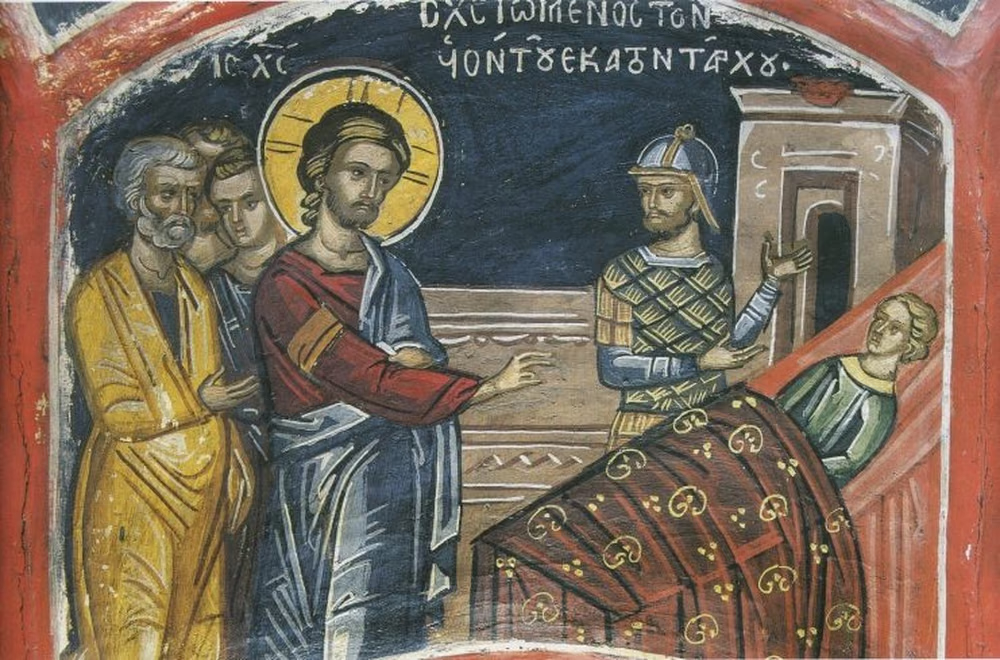
Ο δούλος ενός Ρωμαίου εκατοντάρχου ασθένησε βαριά. Ο εκατόνταρχος, αν και ειδωλολάτρης, προσέφυγε στον Χριστό. Προσέκειτο ευνοϊκά προς τη θρησκεία των Ιουδαίων, ήταν μάλλον προσανατολισμένος προς την αναζήτηση του ενός αληθινού Θεού. Φαίνεται πως λόγω της κλίσης του αυτής παρακολουθούσε και γνώριζε τα σχετικά με τον Χριστό, πράγμα που δημιούργησε μέσα του τις προϋποθέσεις για μια αληθινή σχέση μαζί του. Και ο Χριστός ομολόγησε γι’ αυτόν εμμέσως ότι είναι μέτοχος και τέκνο της Βασιλείας του Θεού (Κυριακή Δ΄ Ματθαίου).
Η αληθινή σχέση με τον Θεό περνάει πάντα μέσα από τη σχέση προς τον συνάνθρωπο. Και ο εκατόνταρχος έδειξε ότι είχε φτάσει στη σωστή σχέση με τον συνάνθρωπο. Αγαπούσε τον δούλο του. Σε μια εποχή που οι δούλοι νομικά δεν είχαν ανθρώπινη υπόσταση, που συγκαταλέγονταν στα πράγματα, στα υπάρχοντα των αφεντικών τους, ο εκατόνταρχος έδωσε αξία στον δούλο του. Δεν τον θεωρούσε πράγμα, που μπορεί να το κάνει ό,τι θέλει χωρίς να οφείλει λογαριασμό σε κανένα. Τον θεώρησε όμοιό του. Ήταν γι’ αυτόν αγαπητός, πολύτιμος άνθρωπος.
Ο εκατόνταρχος έφτασε σε σχέση αγάπης με τον δούλο του, που είναι το ύψιστο ζητούμενο μεταξύ ανθρώπων. Ο δούλος ήταν υπάκουος στο αφεντικό του. «Λέγω στον δούλο μου, κάνε αυτό και το κάνει», ομολογεί ο εκατόνταρχος. Ο δούλος εκτελούσε πιστά τις εντολές του κυρίου του. Όχι όμως από φόβο. Όχι ωφελιμιστικά, για να επιτύχει ανταμοιβή. Όχι κινούμενος από κάποια ανάγκη. Όχι ενεργώντας παρά τη θέλησή του. Όχι θεωρώντας αγγαρεία την εκτέλεσή τους. Όχι εκτελώντας τες με απέχθεια, με αποστροφή, μισώντας αυτό που κάνει. Όχι για να εξαγοράσει την εύνοια του κυρίου του. Τίποτε από όλα αυτά.
Ο δούλος υπάκουε, τηρούσε, εκτελούσε τις εντολές από ευχαρίστηση, από καθαρή αγάπη για τον κύριό του. Για να είναι πάντα ενωμένος σε μια σχέση αγάπης μαζί του. Δεν ήταν εργάτης του φόβου ή του μισθού, αλλά της αγάπης.
Σχέση αγάπης μάς ζητάει και ο Θεός. Εκείνος μας αγαπάει και έδειξε εμπράκτως ότι δεν θέλει να μας αγαπάει κρυφά. Και έγινε άνθρωπος για να μας δώσει «της μεγίστης αγάπης πείραν», να φανεί «τον έσχατον ερών έρωτα», ότι τον διακατέχει ο σφοδρότερος έρωτας για μας (αγ. Νικόλαος Καβάσιλας, Περί της εν Χριστώ ζωής, Λόγος 6, PG 150, 645Β).
Αντίστοιχη αγάπη περιμένει και από μας, μέσω πιστής τήρησης των εντολών του. Όχι για ωφελιμιστική συναλλαγή μαζί του, όχι για να ξεπληρώσουμε κάποιο χρέος απέναντί του, ή να τον εξευμενίσουμε. Αλλά για να αναπλασθεί η φύση μας, να θεραπευθεί από την αμαρτία, να μπορέσει να ενωθεί μαζί του σε ένωση απόλυτης αγάπης. Οι εντολές του είναι σωστικά μας φάρμακα, τρόπος εξυγίανσης, ύψιστο τεκμήριο αγάπης μας προς αυτόν, ασφαλής οδηγός θέωσης.
Εθισμένοι στον δυτικό νομικό τρόπο σκέψης, σκεφτόμαστε τη σχέση μας με τον Θεό συνήθως πάνω στο δίπολο αφέντη-δούλου.
Όμως αυτό επέχει θέση πολύ μακράν της αληθείας.
Ο Θεός επιθυμεί μαζί μας σχέση πατέρα προς τέκνα, σχέση βαθειάς αγαπητικής ένωσης, μέσα σε πνεύμα υπέρτατης ερωτικής παραφοράς.