"SOS" for the demographic crisis in Greece: 19,000 fewer births over a five-year period – A new low in 2025
Births fell to 65,594 in 2025 – A decline in 12 of the country's 13 Regions – The areas with the sharpest drop and the only exception
A "danger signal" for the course of Greece's demographic situation is being sent out by the data announced today by the Hellenic Statistical Authority, which record a further contraction in births in the country in 2025.
The new figures reflect the growing challenges the country faces in tackling the demographic issue, while also highlighting the gradual shift of motherhood to older ages.
Births fell to 65,594 in 2025
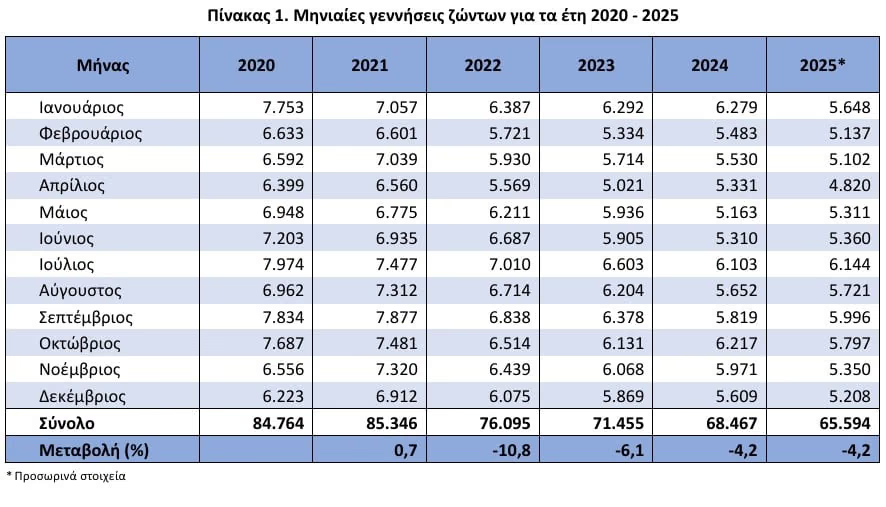
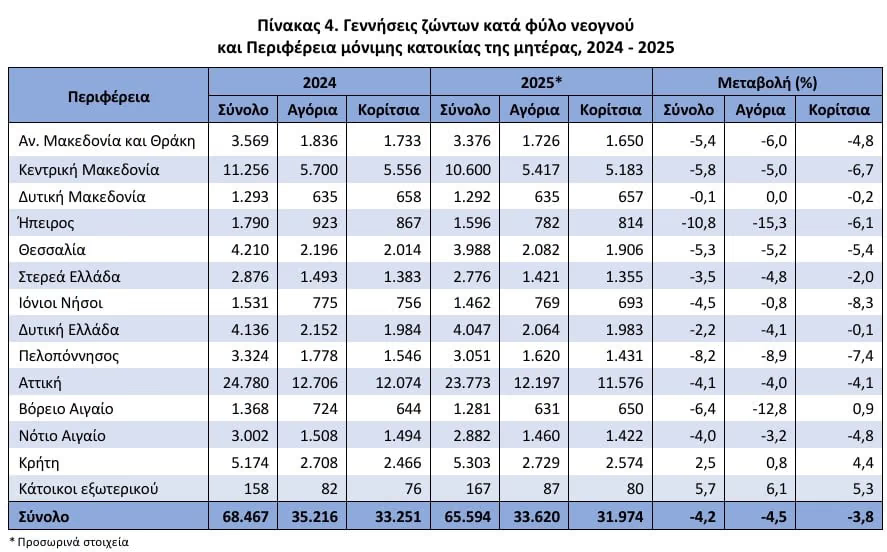
More specifically, according to the provisional data from ELSTAT, live births in Greece in 2025 fell to 65,594 (33,620 boys and 31,974 girls), down from 68,467 (35,216 boys and 33,251 girls) in 2024, a decrease of 2,873 births (-4.2%).
The picture from 2020 onwards
The decline is recorded in the following comparative table, which also captures the major reduction that has taken place year by year, from the 84,764 births that were recorded in 2020. Comparing the 2020 figures with those of 2025 shows that births decreased by 19,170.
Stillbirths in 2025 numbered 420, a decrease of 7.5% compared with the previous year, when 454 stillbirths were recorded.
Significant increase in births in September and May
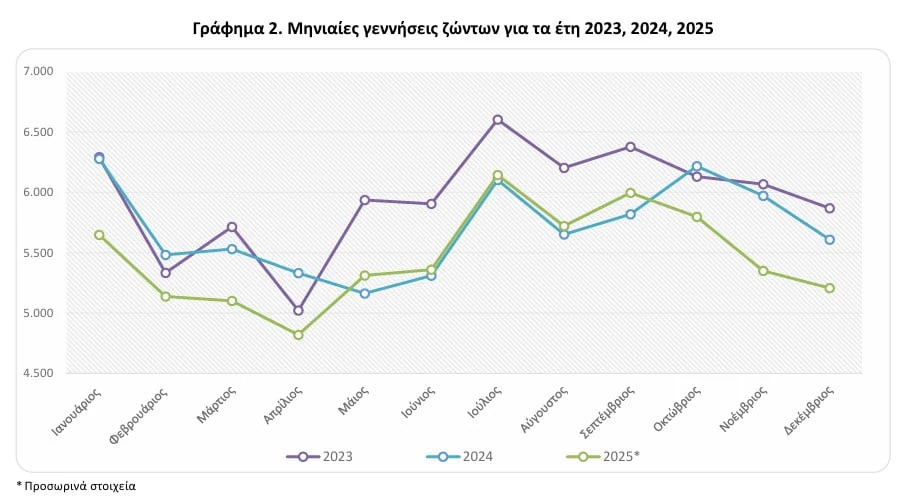
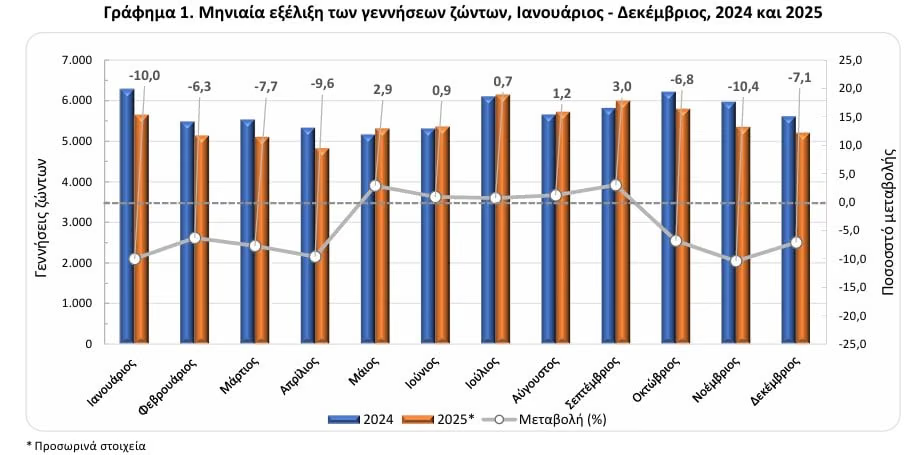
Compared with 2024, the most significant decreases last year are recorded in the months of November and January, by 10.4% and 10.0% respectively. The most significant increases are recorded in the months of September and May, by 3.0% and 2.9% respectively.
As ELSTAT clarifies, the data are revised after the incorporation of more recent data or the updating of previous data transmitted, each time, by the civil registry offices.
Increase in births by women over 40
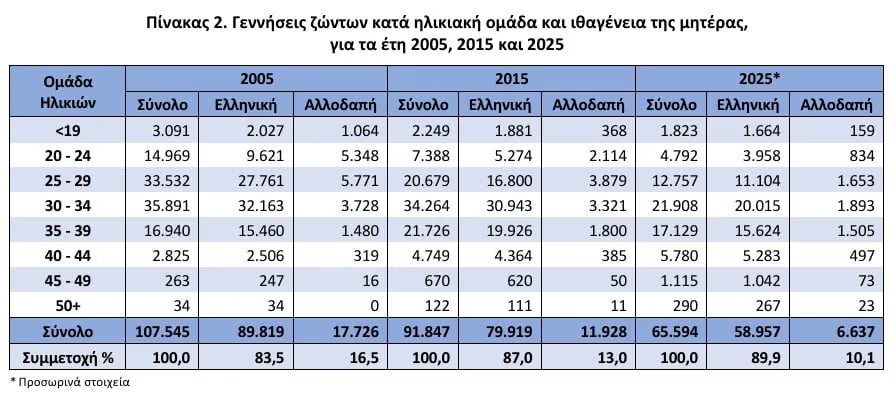
From the analysis of total live births by age group of the mother for 2025 compared with 2015, the main decreases, in absolute terms, are recorded for the age groups 30 to 34 (12,356 births), 25 to 29 (7,922 births) and 35 to 39 (4,597 births), while the main increases are observed for the age groups 40 to 44 (1,031 births) and 45 to 49 (445 births). Correspondingly, according to the comparative analysis of total live births by age group of the mother for 2025 compared with 2005, the main decreases, in absolute terms, are recorded for the age groups 25 to 29 (20,775 births), 30 to 34 (13,983 births) and 20 to 24 (10,177 births), while the main increases are observed for the age groups 40 to 44 (2,955 births) and 45 to 49 (852 births).
The ratio of births based on citizenship
As emerges from the ELSTAT data, the ratio of live births to mothers of Greek citizenship compared with births to foreign mothers stood at 8.9 to 1 in 2025, versus 6.7 to 1 in 2015 and 5.1 to 1 in 2005.
The areas with the biggest "plunge" in births
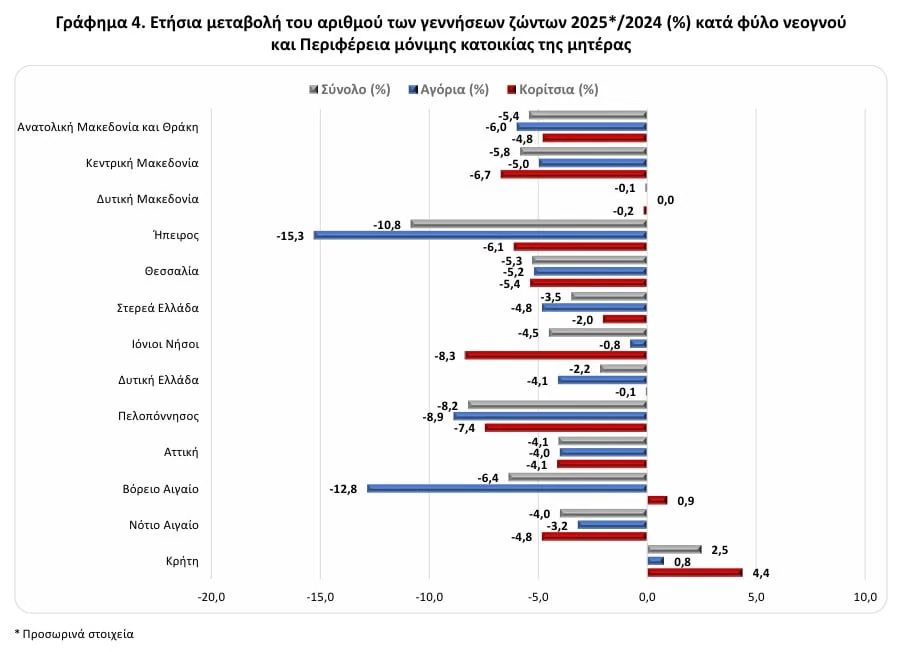
The worrying dimensions of the demographic issue are also reflected in the analysis of total births by Region. Specifically, a decrease in births is observed in 12 of the country's 13 Regions. The most significant decreases, in absolute terms, are recorded in the Regions of Attica, Central Macedonia and the Peloponnese, by 1,007, 656 and 273 births respectively.
Crete the exception
The only exception is the Region of Crete, where an increase of 129 births is observed.